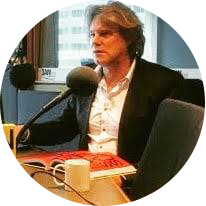
The authors of Creating Schools Where Students and Teachers Want To Be:
Michael Lawrence
I have been a teacher for more than 30 years, working in the government and Catholic systems, teaching as a music specialist and English/Humanities teacher to students from Grade Prep (5 years of age) to Year 12.
My first memory involving wanting to be a teacher is of being in class at my catholic secondary (boys) school and witnessing a teacher insisting boys shower in front of him after being forced to run laps of the oval in their full school uniforms as a punishment for not having the complete sports uniform with them at school. Whilst it would be an exaggeration to say that I had enjoyed school, I had certainly found some of the texts to be fascinating and discovered an enjoyment of reading and literature that stayed with me. I was also starting to enjoy reading history and the documentary programs on it which were starting to appear on television. I also had a keen interest in music and I shunned the Saturday morning children’s TV shows, preferring the music programs on the other channels.
Looking back, I can see that I was developing a social conscience based on the experiences of my family. My father was the Victorian manager of a company manufacturing suspension systems for vehicles, and I can recall us travelling in a brand new Toyota Crown station wagon, the first car I had ever seen with electric windows and an automatic radio!
The death of my father in an accident (as a 10y.o. I was told that he had been trying to prevent a friend from falling and had over-balanced himself while doing so, but I still do not know if this is the truth) saw the Lawrence family move from feeling quite well-off, to struggling in almost every way. Mum was immediately working full-time to fund the raising of 3 boys (my youngest brother was not yet one year old) and our world was turned upside down.
Mum sent me to the local Catholic secondary school, despite my protests as my friends were going elsewhere. She justified the cost by telling us that our father’s life insurance would pay for it – which I later found was not true.
The almost military regime of the school and the corporal punishment which was prevalent came as something of a shock, and I can see that I was still going through the grief of my father’s passing while following the often shared advice that I was to be the ‘man of the house now’. Big shoes for any 10 year old to fill.
My initial plan was to become a carpenter (how very biblical!) and then a woodwork teacher, although music was still my main interest, all advice told me I needed a real job. I didn’t really know anyone at this point who had gone to university, which to me was a place full of professors and the like, and I didn’t think there were any of these in Sunshine, so it was certainly not something I could aspire to. I don’t think careers counselors existed at schools then.
I actually commenced an apprenticeship as a builder, but working for a non-English speaker who was reluctant to explain the finer points of the trade and made the job as unpleasant as possible saw me rethinking my plans, and realising that university was indeed very possible, I made the decision to return to school, complete year 12 and take the more direct route into teaching.
It did give me the unique experience of being a trainee teacher in a classroom I had actually helped build just a few years prior.
Back at school, a senior English teacher (a Miss or Mrs Doolan) encouraged me to write some music reviews for the school newspaper (I believe one of Cold Chisel’s Swingshift album was the first) really brought education to me, placing it squarely where I thought I could see a space for both of us (for some reason copying the Bible passages had failed to connect). It was probably around this time that I decided to pursue a career in education, with a very loud soundtrack.
My first teaching position was a one year contract maternity replacement for a class of 38 year seven boys at the very same catholic school I had attended. Links to the Catholic system had increased when my mother had remarried, some 8 years after being widowed, to a former Catholic Brother.
My first permanent position was at another Catholic boys school in the Geelong region where I combined Music and Drama with English and Humanities classes. It was also where I first met with my co-author, Fab D’Agostin. The biggest difference was the curriculum. For yr.8 Humanities I was told that there was a text book I could use if I wished, though when I saw that it included the same chapter on the Bushmen of the Kalahari Desert that I had studied as a student, I tried to use it sparingly.
Following a visit to Vanuatu I assembled a unit on the Pacific Island nation and students enjoyed the tales of cannibals, explorers and unique culture from this nearby nation. This was long before the days of standardisation, when the teacher still had professional autonomy; If I was to create a similar unit today I would be accused of being unprofessional. The desire to rank and compare students now overrides any wish to make the course relevant or interesting.
I created my own content and passed on the required text to appear on the report cards to the appropriate person on staff. There was no reason for every class to study the same content, and as it wasn’t a year 11 or 12 subject, no centralised examination to teach to.
The students were tough, but also honest and open if you gave something of yourself. This was as basic as Catholic schools got and we were aware that these were students who would not get another opportunity outside of the even more rundown local government schools. There were a couple of other Catholic secondary colleges on the opposite side of town, but their higher fees and facilities put them into an entirely different category to us, something we wore with pride.
In contrast to my previous school this one was in the charge of a short, bespectacled, principal, Brother Smith, who was friendly and open. When I knocked on his door to ask about obtaining leave to travel overseas during the Christmas break after my first year there, he told me to close the door behind me and take a seat. Fearing a lecture about losing valuable teaching time at the end of the year, I sat down and buckled myself in for the worst. I was surprised to be given a list of all the things and places I should do and see while travelling and, on leaving an hour later, the question of how many days I needed to be aboard the crowded pre-Christmas aeroplanes leaving the country was met with, ‘Whatever you need, this is something truly special.’ Such concern for my own benefit left me feeling so indebted to this wonderful man that I rarely missed a day of teaching in the next few years. His leadership style was brave, transparent and very much about his staff.
Staff meetings involved debate on major questions, and any vote on a decision was implemented thoroughly as we all had ownership of the decision. Some staff meetings went beyond 6pm as teachers got involved in issues that they genuinely felt committed to. This created an incredibly vibrant atmosphere which no doubt influenced the growth in student numbers, and expansion to include years 11 and 12, at this point.
Br. Smith attended all union meetings and I saw him vote to go on strike (‘Anything that improves the wages and conditions of my staff is a good thing,’ he announced) before heading back to his office to put together a skeleton staff to cover the staff out on strike.
A change of principal would see the school morale and population decline quickly and it closed just two years after I finished there. While at the time I was quite shocked as events unfolded, I can now see the growth, followed by its decline as a unique learning opportunity to understand what is valuable (“what matters” to use a bit of jargon) and what is not, and how the actions of individuals impact the school environment.
Following a decade of teaching Catholic boys, I did some fill-in (CRT) teaching which included a year as a Grade 3/4 classroom teacher in a nearby government school. This was also a period when I returned to off-campus study, studying more music and literature.
Port Vale Secondary College (not its real name) was something else again. As working-class as you could get, the school of around 1000 students comprised almost entirely of portable classrooms was arranged as impressively as any maze I’d ever encountered.
Coming from Mandama’s grade 3/4 class, where I would have had students in tears if I’d so much as raised my voice (I think it happened once in an entire year), I was really not prepared for this dramatic change of atmosphere. On my first day I found that my seventeen-pupil year 9 English class was also occupied by ten adults. Being from a mainly private-school background where I’d never had more than one teacher’s aide in the classroom, I had to ask who these adults were and why they were in my class. I was quite shocked to find that these pupils warranted so many aides. Some had an aide assigned to them for the entire day, five days a week!
That wasn’t the last of the surprises. Another teacher ‘came clean’ with me when I mentioned the poor literacy level of the above-mentioned class, disclosing that the school applied a form of streaming that neither the students nor the parents (nor, indeed, some of the teachers!) were aware of. On hearing this, my initial response was a feeling of guilt at being a part of the organisation keeping this secret from the students and their parents. Some in this class believed they were doing well academically—and some had been getting good results on the third graders’ work I gave them once I realised that was the standard they were at, including one (Simon) who spoke of a career in IT. My year 9 English class was the lowest-achieving of fifteen or sixteen within the school. The very same material I had been using for my third and fourth graders the previous year was appropriate for the stronger students in this cohort.
As the year progressed I became aware that all my students had home lives that were television drama (often crime) scripts in themselves. Drugs, abuse, assault, under-age sexual ‘activity’ and neglect bordering on homelessness were all present in the room. So-called learning difficulties were the least of their problems.
Morning briefings at Port Vale often felt like speeches at a wake as the rap sheet for the week was read out to waiting staff. Apart from the bad news about students and their families, there was always a list of staff comings and goings. One morning I was surprised to hear a positive report of a graduation night function. Well, up to a point … ‘We’re pleased to report that the year 12 graduation night proved to be a wonderful end to the year for our senior students, their families and staff, with dancing, good food and much revelry being reported by all at the community centre … before the fire.’ For the last month or two of the year I had to move Wednesday’s and Friday’s year 9 English class to the un-charred half of the classroom, a new low in my teaching career. Needless to say, students were not keen to sit at blackened desks and the message sent by a school administration which determined they would continue to use this room was not lost on them.
Getting back to the first term, I immediately dispensed with as much of the year 9 English curriculum as I could (this was before standardised curriculum had really taken hold). The whole class being at primary school level, I had been adjusting the difficulty of the work to suit, enabling some to answer comprehension questions and do better in spelling tests, leading to a sense of achievement. But they were blind to the fact that this achievement was years below year 9.
A few weeks into term one I announced to them one morning: ‘This school does a thing where they divide all students up into different groups, based on how good they are at subjects like English. ‘There are some classes which have all of the students who are really good at English, some which have students of medium ability, and some with the rest of the English students.’
A hand shot up from the somewhat stunned class and Simon commented: ‘We’re not one of the really good classes, are we?’
‘No, we’re not,’ I replied as the room went even quieter—which was something of a rarity. But, as the importance of this sank in, so did the realisation that for once a teacher was being straight with them.
‘Are we one of the middle ones?’ he pleaded, with a blend of hope and sadness.
‘No, unfortunately we’re not one of those groups … We are working at present on middle-primary-school work … but here’s the plan: this term it will be grade 3/4 work to make sure everyone has the basics. Term two will be grade 5 and 6 work; term three, years 7 and 8; and by term four we will be doing year 9 English.’
I was well aware this would not be an effective method to take them all from where they were to year 9, but by giving them a roadmap and telling them exactly where they were they could at least ask questions of themselves and take some control over their learning. While being upfront with my year 9 class had a positive effect on some of them, it also imposed a responsibility on myself to achieve at least a measure of what I had promised. Academic achievement was something many of these students had absolutely no experience of.
Students continued to swear like drunken sailors and expected nothing more from the teachers than detentions and contempt. After-school detention class seemed to be a routine five nights a week for dozens of wayward academics, each with his own Honours degree in Street Life and each hoping to impress fellow club members with an attendance record that in any other circumstance would result in honorary life membership.
I was told the story of a teacher who had thrown a chair through a closed window before walking out of the school never to return. One colleague, Pete, seemed to have the Midas touch in this environment. He was cool and calm with the students, friendly and affable in the staffroom. It would be nearly ten years later when I read of his fate in the newspaper. He received a payout following a court case in which he detailed his breakdown after many years of teaching the school’s toughest classes, despite his pleas to be transferred, backed up with medical advice of his ill health. The court was told he would never work again.
Just as my self-increased load in year 9 English was beginning to bear fruit, the school and the state told me I also had to teach Picnic at Hanging Rock and the other set material for year 9, substantially increasing the pressure I was already placing on myself.
I found my hands shaking on the steering wheel as I drove to school. I was not relaxed when at home with my own young children. My thoughts turned to just walking out, like the teacher in the story I had been told. I saw a doctor; he referred me to a psychologist who gave me reading material designed to help me focus on being ‘in the present’ when not at school.
A position for a part-time music teacher at Belmont Primary was advertised. It was a small school which just a few years prior had faced closure and, after reinventing itself, had managed to reverse this decision. The mood there was positive—exactly what I needed—and I could remain at Port Vale three days per week with my year 9s to whom I was committed, for reasons I could not logically explain.
Port Vale was destroying me, causing me to question everything I knew about teaching, even my capacity and will to keep doing it. Belmont could not have come at a better time. It was blessed with an excellent principal, who greeted every student and parent as they entered school in the morning. He knew the names of every staff member’s partners and children. He wanted to know who you were. The mood in the staffroom lifted when he entered. There was a genuine sense of everyone being part of a team. He also made a point of teaching every class in the school at least once a term, when the classroom teacher really needed a break for professional or personal reasons. In short, he made everyone feel that they were important and their opinion mattered.
The next decade and a half saw a return to the private-school system and I witnessed the accelerated tempo of the standardisation push, and the influence of NAPLAN. As a teacher who liked to tailor lessons to individual classes, watching schools focus everything on NAPLAN and the ATAR score at the expense of all else, was demoralising.
Like the frog in the cooking pot, the heat was slowly turned up as teachers saw the trial of NAPLAN (“It’s just a snapshot, we won’t be changing anything…”) turned into an obsession with testing, data collection and teaching towards the test. Non-academic subjects ignored by NAPLAN were pushed aside by schools, with thousands of primary schools deciding that a music specialist (or Art) was no longer necessary.
Schools introduced the position of ‘Head of Teaching and Learning’ whose role became head of standardisation and teaching to the test. The academic curriculum became the focus, ahead of teachers and students. Every class in the school at any particular year level had to be studying the same material, the same way, at the same time. The view quickly became that if improvement was not being found, it was likely the fault of a wayward, rogue teacher who was doing something different and letting the side down.
Of course, there was no improvement, but nobody was allowed to question these practices- it was literally written on the bottom of every page of the meeting agendas! One English Faculty head told me that all classes in each year level (that was 10 classes, totalling 250 students) had to study the same texts and do exactly the same assessment work so that at the end of the year, when awards were given, it would be done so ‘fairly’. I think there were four or five awards for English at each level. Exactly who this was fair for was never discussed.
Following more than a decade of no improvement in VCE results during a time when tens of millions had been spent on facilities, when staff asked if there would be a review, they were assured that this would happen in good time, only to hear nothing further.
It was in the middle of this that I first visited Finland, at the suggestion of an Australian-music obsessed Finnish friend who also happened to work in teacher education there.
I remember thinking what an incredible impact this Finnish knowledge will have when Australian schools find out that standardisation, and so many of the other practices we had made standard, were not only unnecessary, but in some cases downright harmful. How this will free up teacher time and allow for creativity and innovation!
My first response in Finland was to be somewhat shocked when questioned about my own practices. I had assumed -trusted -that if we were using them then there was no doubt that it was best practice. I had been feeling uncomfortable with the direction we had taken, but I trusted that it was the best way. I made it a mission to look further into this, if for no other reason than to be able to answer questions such as this when they were put to me. (If there is one big difference between the two systems, it is the fact that the Finns are open to discussing all elements of education – there is no attempt to shutdown discussion or questioning. Education is their profession and they are expected to be informed about it!)
Unfortunately, looking into our practices only led to more questions as the research behind standardization and so many other practices I had been using, and took for granted simply did not stand up to any scrutiny.
I remember thinking what an incredible impact this Finnish knowledge will have when Australian schools find out that standardisation, and so many of the other practices we had made standard, were not only unnecessary, but in some cases downright harmful. How this will free up teacher time and allow for creativity and innovation!
Why were we continuing when all indicators clearly showed we were going nowhere?
Another visit to Finland followed as I read more studies into the latest education practices. The Finnish education student is told to study best practice and then try and improve on it. Standardisation is understood as depersonalising to the students, and halting all innovation for the teachers. Essentially, a dead end street.
Sometimes life has a way of choosing you; putting something in front of you that just has to be done. It was clear that what I was witnessing over and over in Finland was the future of education – one Finnish teacher who had taught in Australia estimated that we were 30-40 years behind. They had gone beyond talking about instruction and blindly assuming that all children were empty vessels just waiting to be filled. Beyond assuming that teachers would just deliver the test’s content – often in prefabricated lessons- and be judged according to grades derived from standardized tests.
The Finnish education student is told to study best practice and then try and improve on it. Standardisation is understood as depersonalising to the students, and halting all innovation for the teachers. Essentially, a dead end street.
The Finns now looked at how best to create intrinsic motivation and a love for learning in general, with the understanding that this will improve the lifelong outcomes for students rather than just the next test result.
The school I was working at completely ignored the Testing 3,2,1,… book, despite it receiving excellent reviews – and the school’s results showing no improvement in the previous decade despite tens of millions of dollars in building works. This was unfortunately indicative of many Australian schools, where ‘evidence-based’ practice is the catch cry, but only the mandated practice is allowed- and asking for the ‘evidence’ is definitely not permitted.
Where teaching was once an intellectual profession, we have witnessed its dumbing down, with the removal of autonomy and the use of standardised curriculum and testing. This mirrors the United States, where teachers are not trusted to make any decisions regarding curriculum or their practice (yet many states are now pushing for them to be trusted with firearms in the classroom!) Banning books and controlling the curriculum further undermines teachers.
How can we have a ‘profession’ where all practice is mandated and micro-managed, and new research (or not so new research) is simply ignored completely?
I have a son who works in cyber-security. He was being courted by employers a year before he finished his degree and now works from home four days per week. His company holds regular ‘hackathons’ where employees are challenged to come with innovations to improve the business.
Whilst this was happening for him I watched nearby schools moving to scripted standardised curriculum while teachers were instructed to not ask any questions regarding practice. Students are seen as empty vessels to be loaded up via ‘direct instruction’ in order to cram for standardized tests. Some schools are testing on a weekly basis. How soul-destroying must it be for all to know that everything they ‘learn’ is to be measured on a standardised (whole year level) test?
Why would any intelligent young person choose the teaching profession?
I escorted groups of education leaders from a number of countries (it was originally designed for Australians but demand from other countries was far greater) to see Finnish schools in action. Australian educators have been conditioned to not look outside the bubble we have here, yet it is essential that we do not fall behind any further than we already have. I often use the United States’s attachment to firearms as an example of how easy it is to normalise an unusual situation once it has been the status quo for some time- regardless of the obvious damage it is doing.
My Finnish colleagues – and I now count many of them as friends – find the whole thing quite unbelievable. They have sworn an oath (as all Finnish teachers do)that they will put the interests of the child above anything else, and this includes government or school data collection. They cannot understand how Australian teachers can be professionals accountable for the wellbeing and safety of their students, yet implicated in practices which all research (and our own experience) tells us is damaging to the wellbeing and mental health of the students.
I also became increasingly conscious of the funding gap in Australian education; and conscious that I was on the wrong side of this – I was part of the problem. Essentially, while reports and enquiries such as that led by David Gonski had highlighted the enormous funding gap between Australia’s most privileged schools and our least advantaged, it was difficult to find any administrator in an advantaged school who was even prepared to admit to the existence of this (most had no experience in disadvantaged schools) and many are prepared to argue that it is justified!
I had watched my own school grow to three times its size with the addition of more than 50 million dollars in building funding, while the similar sized government school next door had changed little in the same time.
My time in Finland and the associated research made me conscious of the fact that I was an educator for all Australian students, not just those of the particular religious organization associated with my school (whose teachings said nothing about creating an exclusive club for members only). Australian education will never be improved until it removes the gap between schools for those with the most privilege and those with the least. At the moment the system is widening that gap.
I understand that for the many working in the independent and Catholic sectors, this can be seen as an existential problem, but we will never transform Australian education until we all agree that we are (all)on the same team. I have rankled a few educators when I’ve suggested that we’re not serious about education until we’re serious about everyone’s education. I would invite these educators to see for themselves a system run with equity, and then some of the less fortunate schools in Australia.
One of the reasons for the successor countries like Finland and Estonia is that they are all working together, not against each other.
Dr Fabio D’Agostin
It would not be wrong for me to claim a life-long interest and direct involvement in education. I have been in learning institutions as a student or as an educator for at least 60 years without a break. And for the most part I have enjoyed it, although with age there has come some crankiness, which I hope has been explained in this book. I am thankful to the many teachers who have taught me well, the peers who learned with me, the supervisors who guided me and the colleagues I have taught with. I owe so much to the wisdom, support and role modelling of hundreds, maybe thousands of people.
My first vivid moment in education occurred at a local YMCA kindergarten located down the street from where I grew up. A lady, I guess she was the teacher, picked me up and swung me round and round boisterously singing ‘Fabio is going back to Italy’. I must have spoken some rubbish about where my parents had come from and where we all soon headed. I picked up English at kindergarten as my third language already after Italian and Furlan (a dialect). But it wasn’t true about the travel and I was born in Footscray, Melbourne anyway.
Corpus Christi, Kingsville, in Melbourne’s west, was my primary school and place of indoctrination into Australian culture. I quickly learned about football and cricket, downball, handball, chasey, brandy, tiggy, twisty sandwiches and any number of other mid-twentieth century schoolyard staples. I even discovered bullying from both sides of that game. We all make mistakes. A fond memory of my early years was when we were allowed to use cuisenaire rods, colour-coded wooden sticks of unit lengths from one (a cube) to ten. I can still remember the colours, the blue four and the brown seven being my favourites. What a great way to do sums.
Once they told us, for the benefit of some visiting strangers, I think they may have been academics, to just build things from the rods. I built my father’s factory, as I proudly told one of the visitors. I distinctly remember the fun I had, constructing walls, benches, rudimentary motors and crane-like things. This was an early experience of a theme that would become my forever travelling companion.
The school was run by an order of nuns and in those days there were still plenty of them around. They put us through all of the Catholic rituals, communion and confirmation chief among them, but they also promoted a general Christian ethos (when they weren’t strapping the back of our calves) that I have always found valuable. A memorable event occurred one day in 1969 when they organised for our class to all go to a teacher’s nearby house and watch Neil Armstrong walking on the moon.
My next educational stop was St Paul’s College, Nth Altona, a regional Catholic boys’ high school run by Marianists, an American order of brothers. A formative journey, to say the least. A lasting impression was the toughness of the teaching culture. Many teachers were pre-emptive in their disciplinary approaches, expecting the worst behaviours and ensuring that they fired the first shots. I always remember reflecting after the first yelling, sanctioning or strapping in any class that it was not a good way to get boys aboard. Scared students don’t make for good learners.
Some of the most fearsome teachers always wore suits, leading me to the conclusion that formal clothing is a hollow way to gain respect when what you actually do earns contempt. I have resisted wearing suits and been wary of people in suits ever since. Despite these observations I was lucky enough to have several teachers who practiced far more effective ways forward. They showed me what can be achieved through understanding, patience and empathy and their shining examples helped me decide by Year 10 that I too would become a teacher. And I knew what type of teacher I wanted to be.
The high school years also showed me I was good at conventional learning. I worked hard at school, did not have to be pushed to do homework and got great marks in all subjects. Learning was easy for me. Teachers told me and showed me what I had to master and I always went away and did it. Most of my friends were not so lucky and I could never understand what was holding them back, a preview of things to come when I eventually started teaching. In the meantime I did a lot of peer tutoring and learned the valuable lesson that talking through what you think you know is an excellent exercise in realising what you really know.
I was a good writer but focussed on mathematics and science, graduating with flying colours and having every university course in the land at my disposal. Of course I chose teaching, never in doubt. Five years at Melbourne University followed, including a year out to co-edit Farrago, the student newspaper. The further into my degree that I travelled, the more aware I became that quality teaching was not necessarily my lecturers’ first priority. Such experiences as much as the content of my studies showed me that teaching is an effortful art that must be practiced and developed if you are going to be any good at it.
Educational psychology, including bedrock theories from people like Piaget and Maslow, was a central theme in my teaching course although it was not always easy or obvious to relate the standard theories to the classrooms in which I trained. There did not seem to be a single script that I could follow to track the student behaviours I was seeing and dealing with. As with any true science, reality and theory are often difficult to reconcile. The myriad variables in play within the educational context of human development and behaviour are difficult to tame solely through our cognitive and social sciences. It is indeed a jungle out there.
So, I found myself on a well-trodden newly graduated teacher’s path. The real learning was about to begin. One of my first conundrums was what is it that motivates students and how can I capture that. A book I was given gave me my first break. Teacher Effectiveness Training (TET) is a US resource that put me on the road to becoming a competent teacher. It promoted the belief that the student-teacher relationship is a critical doorway through which learning may happen. I found one of my career-long guiding principles.
TET was written by an enlightened psychologist, Dr Thomas Gordon, about 50 years ago. It was a response to parents who wanted their children to be treated the same at school as they were treated at home. Not a bad idea. Assuming that children generally respect their parents, value them and appreciate their guardianship, these are the same student attributes I want to see in my classroom.
Of course there is much about parenting that a teacher cannot be. I was never going to be a parent to my students but without necessarily knowing it, children instinctively look for parent-like qualities in the teacher who stands before them. Decades later, I encountered a parallel principle in Jared Cooney Horvath’s neuroscience. He argued that in the case of using laptops and tablets in schools, if students only ever knew the devices as game-playing and entertainment platforms at home, why would they not have the same expectation when they were instructed to use the technology in a classroom?
Likewise, what a child knows and loves about adults is primarily sourced through their caring parents, so why would they not seek out and respond to the same positive qualities in their teachers? If I cultivated a classroom identity that tapped into the positive feelings, comfort, attachment and security that students were used to experiencing with their parents at home, could I get them aboard with my educational agenda? In short, yes, big time.
I developed a mantra, just be nice. In my interactions with students, I projected characteristics including sensitivity, interest, empathy, understanding, patience, availability, respect and friendliness. I stripped back the formality, hardness, authority and even threat that so many of my supervising teachers had encouraged during my training. My relationships with students blossomed. Academically successful students and strugglers, happy students and the troubled, males and females, demographically wealthy and poor – being nice had universal appeal.
The benefits to my teaching were enormous. Respect and compliance usually did not have to be enforced, imposed, mandated or coerced. Student anxieties, apprehensions, tensions and fears dissolved when they came through my classroom door. They could be their best selves and I could be my best teacher. I could teach in whatever manner, traditionalist or progressive, and students would buy in. I could set challenging tasks or stick to routine work, it didn’t matter. My students were aboard with me, travelling with me, not against me. They wanted to be in my classroom and so did I.
On a recent tour of the Finnish education system I saw the central TET principle enacted on a national scale. Our host, Mikko Turunen, explained to us, ‘we treat our schools as extensions of students’ homes’. Classrooms were places of respect and trust. Students and teachers commonly remove their shoes before entering. Cooked lunches are provided free for all students, turning the event into a daily kitchen table opportunity for students and staff to interact informally and form strong social bonds beyond the classroom and schoolyard.
I looked for signs of chronic student behavioural issues, a current major indication of restlessness and unhappiness within our Australian schools, and found none despite my questioning of many teachers, students, principals and administrators. Finnish school corridors and classrooms were noticeably calm and pleasant environments. Students spoke kindly, even warmly, about their teachers, and teachers talked similarly about their students. If they had to sometimes leave their classroom unattended for periods of perhaps 10 minutes or more, Finnish teachers completely trusted students to continue their work. All of this was noted not because we just visited an elite school or the best school, every school in Finland is the same. And I saw no teachers, principals or administrators wearing suits.
A teaching approach built on the theme ‘just be nice’ can of course be problematic. Students unused to respecting their parents or teachers may respond poorly and create issues for themselves or others. Or some school administrations may strongly promote strict behavioural expectations for both their students and their staff, valuing military-style order, strongly authoritative teacher demeanours, uniform codes, rules and procedures. Such policies risk switching the school focus from quality education to compliance control. Academic or behavioural rules and sanctions, every school has them, need to be judiciously applied. The central consideration should always be, how is this policy contributing to quality educational outcomes?
I see sanctions as an admission that my teaching approach has fallen short, they are a backup that allow me further opportunity to find what might work for a student. My policy is minimalist. Frequent use of sanctions sends out negative messages about the teacher and the students, it is lose-lose. The ideal school, a goal that all educators should continuously strive to achieve, would have no need for sanctions regimes because students as much as teachers were happy and fully engaged by their learning and teaching.
My next teaching breakthrough was the realisation that children, at least as much or more than adults, are energised by the pursuit of pleasure. There are few stronger motivational drivers for a child than wanting to have fun. I suspect that for many students, the times of the school day when they are most highly activated, developing skills, focussed on a goal, most likely to be collaborating, mutually supporting or constructively debating, are recess and lunchtime. Then the bell goes, they pack away their play equipment and enthusiasm and they sleepwalk into another class.
The question I pondered was, can I create the kind of learning environment where students will enjoy themselves like they do in their breaks? If my teaching could harness the same amounts of exuberance and excitement, learning would likely be elevated to a higher level. I set myself the challenge of melding educational business with pleasure and I targeted the tasks and activities that I implemented in lessons as how I would succeed.
It became obvious as I dug deep into the existing mathematics education resources at the time, mainly hard copy books and worksheets, that any elements of enjoyment or fun could only be found on the fringes. Mainstream mathematics was serious business. This observation reflected a more general and traditional division of the human mind in education. Learning was all about cognition, or perhaps intellectualism. Other dimensions of the mind, particularly the affective realm including emotions, were considered as distractions or side-effects, irrelevant to teaching and learning.
Regardless, my early experimentation with material that I could find and adapt was successful. Students responded very well to work that got them doing mathematics away from the routine lectures and textbooks and into puzzling, trialling, measuring, simulating and problem-solving. My definition of ‘very well’ is that students were engaged, motivated, interested and happy to be performing non-routine tasks. Their energies were directed into learning to an extent that I struggled to achieve through my conventional teacher-focussed teaching. This was well worth discovering.
Having established that the latent motivation residing in many students can be unlocked through flipping the nature of tasks to be less about me and more about them, I needed to deal with the issue of curriculum. The rote and repetition of traditional skills practice, dealt with most efficiently for the teacher, not necessarily the students, through the flagship pedagogy of conventional teaching – explicit instruction – was absent from the new tasks that I was playing with.
I had inadvertently stumbled into the mathematics teaching war, ongoing tensions that have never gone away. Traditionalists on one side, progressives on the other. Conventional teaching worked for me as a student. I was told and shown what to learn and through repetition, personal application and practice, I learned. When I was on the other side of the equation, I realised that many students did not learn like me. For them it was quite a different story. It would not be unfair to suggest that in terms of coming to learn and love mathematics and feel good about the subject, it was death by direct instruction.
A supreme example of a conventional teaching fail, also frustrating because I was a part of it, occurred in a school where I taught for many years. We used to teach a topic called linear graphing to students in Year 8, then again to the same students in Year 9, and Year 10, Year 11 and Year 12. The same basic skills and concepts were ‘chalked and talked’ for 5 years running and at least 50% or more of students emerged with minimal levels of understanding. Maybe we just needed Years 13 and 14 but probably not. It was Einstein’s madness, when you repeat the same thing over and over with the expectation of different results.
I don’t think I am unfairly blaming direct instruction. Perhaps a dozen different teachers over those 5 years, working from up to half a dozen standard textbooks, employing the same conventional approach, amounted to a mass of students who were conceptually bereft. Even providing them with competent sets of routine skills, a target we surely could have achieved, was poorly accomplished. When underlying concepts are missing, simple algebraic and numerical procedures can lose their meaning to the point where they are senseless exercises and confusion reigns. I have been aware of similar outcomes and circumstances in many other schools.
The extent of the problem can be explored by comparing typical successful students – experts, and direct instruction does foster some successes, with counterpart failures – strugglers. The linear graphs master can inspect all the elements of an equation, its constants and variables, and conjure its graphical appearance in their mind. They can visualise the steepness of a given gradient value and effortlessly position a line on a graph, through mastery of intercepts. They can seamlessly fit a linear model to a practical context and make predictions of outputs within given parameters, evaluating the quality of their results against intuitive expectations. Experts do all this and much more, appreciating and enjoying the power of this topic.
The linear graphs struggler gets stuck on what means what in an equation. The letters and numbers have something to do with straight lines on graphs but it’s hard to know where things called the gradient and intercepts are. Fractions come into finding gradients, that’s a worry. They sometimes get mixed up about what is horizontal and vertical, x or y, and get confused by terms like, ‘satisfy the equation’ and ‘uphill or downhill’. And why do we also have to solve equations if the question is to draw them? Strugglers understandably think and say things like, ‘this mathematics is no fun at all, it’s boring, confusing, difficult and useless and I’m no good at maths anyway’.
By Year 12, those hapless students would have spent about 30 hours of class time on linear graphing, full of teacher examples, instructions and textbook sums, for a pitiable academic return. An unacceptable level of productivity in most industries. This is before even considering the affective fallout from the accumulated experience. Repeat episodes of boredom, frustration and academic failure fuel self-doubt, despondency, resignation, despair and dislike. These are awful, endemic outcomes and too many educational administrators seem perpetually caught like deer in headlights, unable to imagine more effective ways forward.
The rationale for the madness was that students need to acquire basic skills and master essential concepts before they can develop deeper understanding. Fair enough, although not always correct as suggested in the linear graphing example. If even a portion of those 30 hours had been given over to alternative forms of inquiry, they do exist, the disaffected cohorts’ academic outcomes could only have been improved. Possibly an even more valuable reward would have been the enhanced levels of confidence, morale and positive attitudes towards mathematics that may have arisen.
The acquisition of basic skills as preliminary steps to more complex conceptual development is problematic. The basics often include number magnitude and counting sense, decimals, fractions, directed numbers and much more. All of these topics involve major conceptual understanding. If their establishment is largely based on being told what to know, the process which lies at the heart of direct instruction, it can be a flimsy springboard for a student to develop more complex ideas.
While I discovered the limitations and dangers of blunt direct instruction, I never lost the idea that the approach can have a place in effective teaching. At its best, direct instruction can be thought provoking, informative, guiding and efficient. In measured doses, perhaps interspersed with accessible questioning, storytelling, summarising, substantial interludes for student doing and thinking and even humour, teacher talk can maintain a worthwhile educational edge. This is far truer for routine skills and processes than for deeper learning and perhaps partly explains the enthusiasm of advocates for direct instruction.
Mathematics, however, is a much richer body of concepts and abilities than the numbers and operations that form its lifeblood. And this is where direct instruction particularly struggles. I have never been able to effectively embed a concept through direct instruction, although I have frequently tried. And I know of no other user of direct instruction who has done much better. My conclusion is that a teacher cannot talk their way into the deepest recesses of the student brain, where a well-established concept will reside.
The advent of digital classroom technology in the early 2000s did not help, despite the enormous hype, promise and cost. Graphics calculators instantly became the most capable brains in the mathematics classroom, coupled with the formidable reach of laptop and tablet computing. Yet the development of student understanding, if anything, was enfeebled by the presence of these gadgets. Teachers like me didn’t know how to improve our teaching with them and probably still don’t. IBM and the other companies who made fortunes out of the computer tidal wave forgot to give us the manual on how to use them educationally. I almost lost my job because I was deemed to not be using computers enough in mathematics classrooms. My lack of conviction then has now been backed by two decades of academic stagnation in relation to computers and classrooms. Maybe what teachers do regardless of computers matters more.
Given my beliefs, I regard curriculum content in mathematics as a major driver of suitable pedagogies. In Victoria, Australia, the State curriculum is well documented. It details content at each Year level with concise language and separation of skills and processes into discrete components. The content descriptions mainly use low-level command terms like ‘solve’, ‘follow’, ‘count’, ‘define’, ‘perform’, ‘use’ and ‘simplify’ but also a few more challenging actions like, ‘explore’, ‘apply’, ‘create’ and ‘experiment’. The expressed aims promisingly include ‘develop a positive disposition towards mathematics’ and ‘recognise it as an accessible and useful discipline’.
The full flourish of detail that might constitute a complete mathematics education is hidden under a ‘Show more’ icon. This is unfortunate as many of the most valuable possible outcomes are out of first view. I believe that many implementations of the Victorian curriculum do not move much into these richer areas. It is only too possible, and probably tempting for time-pressed teachers, to present all of the up-front content mainly using direct instruction methods. This is my concern, such teaching can easily defeat the two cited aims for many, apart from impairing the quality of their learning.
About mid-career, I was presented with an opportunity to pursue my thinking in the form of a PhD study program. I spliced my preoccupations into one theme, how are student emotional outcomes associated with the types of activities they negotiate in a mathematics classroom? I got to explore both the student academic and affective experiences in relation to different pedagogies. It was a fascinating undertaking and it has been described earlier in this book.
 Michael Lawrence and Dr. Fabio D'Agostin | Creating Schools...